In today’s digital world, Google Ads has become one of the most powerful tools for online growth. If you are new to online marketing, understanding how google ads works can help you attract targeted visitors, generate leads, and increase sales quickly. Businesses use Google advertising system to appear on top of search results and reach potential customers at the right time. Unlike organic traffic, Google Ads delivers instant visibility. Moreover, it works on a pay-per-click model, meaning you only pay when someone clicks your ad. Therefore, beginners can start with small budgets and scale gradually as performance improves.
What Is Google Ads & Why It Matters 2026
Google Ads is an online advertising platform by Google that allows businesses to show ads on search results, websites, and videos. Understanding how google ads works helps marketers reach people who are actively searching for products or services. Unlike traditional marketing, Google Ads targets users based on intent, which increases conversion chances. Additionally, businesses can control budgets, track performance, and scale campaigns easily. In 2026, digital competition is growing fast; therefore, Google Ads becomes essential for visibility, traffic, and sales growth for both beginners and professionals.
Step-by-Step Google Ads Working Process
Understanding how google ads works becomes simple when broken into steps. First, advertisers create a campaign and choose a goal like traffic or sales. Next, they select keywords related to their business. When users search those keywords, Google runs an instant auction. Ads with better relevance and higher bids appear on top of results. Finally, advertisers pay only when someone clicks, which follows the PPC model. This system ensures targeted reach and measurable results, making Google Ads highly efficient for businesses aiming for quick online growth and qualified traffic.
Campaign Setup
Choose goals, budget, and campaign type.
Keyword Trigger
Ads show when selected keywords are searched.
Google Ads Auction and Ad Rank Explained
The auction system is the core of how google ads works. Every time someone searches, Google compares multiple ads competing for that keyword. Google calculates Ad Rank using bid amount and Quality Score. Higher Ad Rank means better ad position. Quality Score depends on ad relevance, expected CTR, and landing page experience. Therefore, even with a lower bid, highly relevant ads can win better placement. This system ensures users see useful ads while advertisers get fair competition and optimized costs for better ROI and visibility.
Types of Google Ads Campaigns
Google Ads offers multiple campaign formats to reach audiences across platforms. Knowing them improves understanding of how google ads works in different scenarios.
Search Ads
Appear on Google Search results when users search keywords.
Display Ads
Banner and image ads across Google Display Network websites.
Shopping Ads
Show product listings for ecommerce stores.
Video Ads
Run on YouTube before or during videos.Each campaign type serves different marketing goals like awareness, traffic, or conversions.
Keyword Research Basics for Google Ads
Keyword research is the foundation of how google ads works effectively. Keywords trigger ads when users search relevant queries. Choosing high-intent keywords increases conversion chances, while negative keywords prevent irrelevant clicks. Marketers should balance search volume and competition to control costs. Long-tail keywords often bring better ROI because they target specific user intent. Additionally, continuous keyword optimization improves campaign performance and lowers CPC over time. Proper research ensures ads reach the right audience at the right moment, maximizing results.
Targeting Options in Google Ads
Targeting helps advertisers reach specific audiences, which is essential in understanding how google ads works. Businesses can target users by location, language, device, and demographics. Audience targeting allows marketers to show ads to users based on interests and behavior. Remarketing helps re-engage visitors who previously interacted with the website. Additionally, device targeting optimizes ads for mobile or desktop users. These targeting features ensure ads reach relevant users, improving conversions and reducing wasted budget.
Google Ads Cost and Budget Factors
Cost management is a key part of how google ads works. Google Ads uses a CPC (cost-per-click) model, meaning advertisers pay only when users click. Costs depend on keyword competition, industry, targeting, and Quality Score. Higher competition increases CPC, while better Quality Score reduces it. Advertisers can set daily budgets and bidding strategies to control spending. Smart budget optimization ensures maximum ROI without overspending, making Google Ads suitable for both small and large businesses.
Quality Score and Why It Matters
Quality Score plays a major role in how google ads works. It is a rating from 1 to 10 based on ad relevance, expected CTR, and landing page quality. Higher Quality Score improves Ad Rank and reduces CPC, allowing advertisers to get better positions at lower cost. Therefore, improving ad copy, targeting relevant keywords, and optimizing landing pages helps increase Quality Score. A strong score leads to higher visibility, better traffic, and improved campaign performance.
Create Your First Google Ads Campaign
Launching a campaign is easier once you understand how google ads works. First, create a Google Ads account and choose a campaign goal. Next, select campaign type and targeting settings. Then, add relevant keywords and write compelling ad copy. Set your budget and bidding strategy carefully. Finally, launch the campaign and monitor performance regularly. Continuous optimization improves results over time and ensures profitable advertising.
Basic Steps
Account → Campaign → Keywords → Ads → Launch
Google Ads Optimization Tips
Optimization improves results and defines how google ads works in real marketing. Advertisers should monitor CTR, conversions, and cost regularly. A/B testing different ads improves performance. Adding negative keywords reduces wasted clicks. Improving landing page experience increases conversions. Adjusting bids based on performance ensures better ROI. Additionally, conversion tracking helps measure success and refine strategies for long-term growth.
Common Google Ads Mistakes to Avoid
Beginners often misunderstand how google ads works, which leads to poor results. Using broad or irrelevant keywords wastes budget. Ignoring conversion tracking prevents performance measurement. Low-quality landing pages reduce conversions. Not optimizing campaigns regularly decreases ROI. Additionally, poor targeting can bring irrelevant traffic. Avoiding these mistakes helps advertisers run profitable and effective campaigns.
Benefits of Google Ads for Businesses
There are many advantages to understanding how google ads works. It provides instant traffic and fast visibility. Businesses reach highly targeted audiences based on intent. Results are measurable using analytics and conversion tracking. Campaigns can scale easily with budget increase. Additionally, Google Ads supports brand awareness, lead generation, and online sales. These benefits make it a powerful marketing tool in 2026.
Is Google Ads Worth for Beginners
Many beginners ask whether learning how google ads works is worth it. The answer is yes, because even small budgets can generate targeted traffic. Google Ads offers measurable results, flexible spending, and scalable growth. Although there is a learning curve, proper strategy and optimization bring strong ROI. Beginners who test, learn, and optimize consistently often achieve long-term marketing success.
Real-World Working of Google Ads
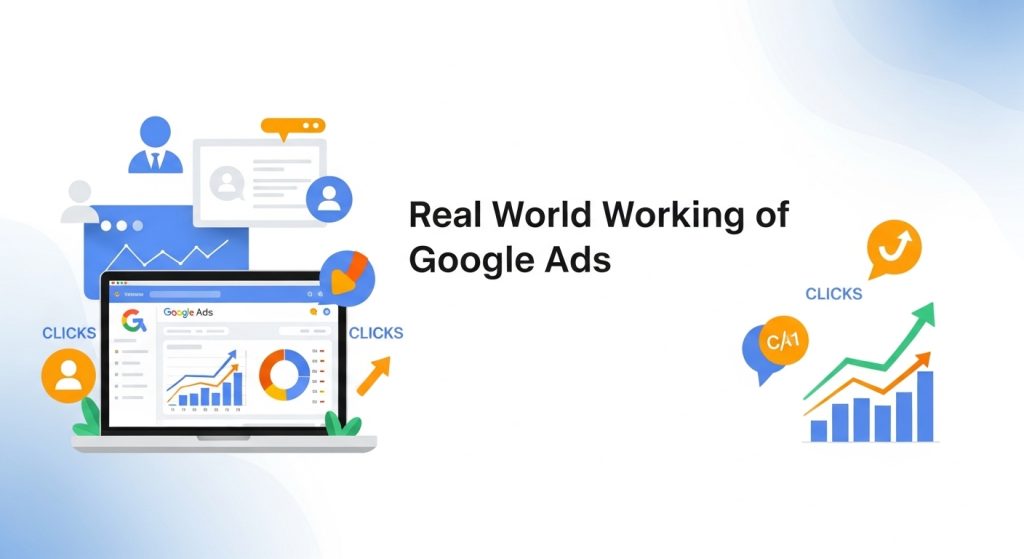
In real marketing, how google ads works follows a simple cycle: keyword targeting, auction competition, ad display, and performance optimization. Advertisers research keywords, create ads, and set bids. Google evaluates ads using Quality Score and Ad Rank. Winning ads appear to users searching relevant queries. Continuous tracking and optimization improve conversions and ROI. This practical workflow makes Google Ads one of the most effective digital advertising systems today.
Conclusion
Understanding how google ads works is essential for beginners who want to grow their business online. By learning the basics of campaign creation, keyword targeting, auction systems, and optimization, you can drive targeted traffic, increase conversions, and improve ROI. Google Ads offers multiple campaign types, including Google Search, Google Display Network, YouTube, and shopping campaigns, providing flexibility to meet business goals. With careful budget management, high-quality ads, and continuous optimization, even beginners can achieve measurable results. Start small, monitor performance, and scale strategically to make the most of this powerful advertising platform in 2026.
FAQs
Google Ads is a Google Ads that allows businesses to display ads on Google search results, YouTube, and partner websites to attract targeted customers.
Google Ads operates on a PPC (pay-per-click) model. Advertisers bid on keywords, and ads compete in an auction. Winning ads appear to users searching relevant queries, and advertisers pay only when users click.
Common campaigns include Search Ads, Display Ads, Shopping Ads, and Video Ads on YouTube. Each type serves different marketing goals like traffic, sales, or awareness.
The cost depends on competition, industry, keyword demand, and Quality Score. Ads are billed on CPC (cost-per-click) basis. Careful budget and bid management help optimize ROI.
Yes, beginners can start with small budgets, learn how google ads works, and gradually scale campaigns. Proper research, targeting, and optimization ensure effective advertising results.