Every advertiser eventually reaches a stage where results are good but growth becomes difficult. Increasing budgets often leads to higher costs instead of more leads. Therefore, learning how to Scale Facebook Ads Campaign properly becomes essential for sustainable growth.Top-performing agencies and competitors focus on structured scaling rather than aggressive budget increases. Platforms developed by Meta Platforms provide powerful automation tools that allow advertisers to grow campaigns intelligently. Through Meta Ads Manager, marketers analyze performance signals, audience behavior, and conversion trends before scaling.Successful businesses understand that scaling is not about spending more money. Instead, it involves improving efficiency while maintaining cost stability. A strategicScale Facebook Ads Campaign approach ensures leads increase without damaging profitability.
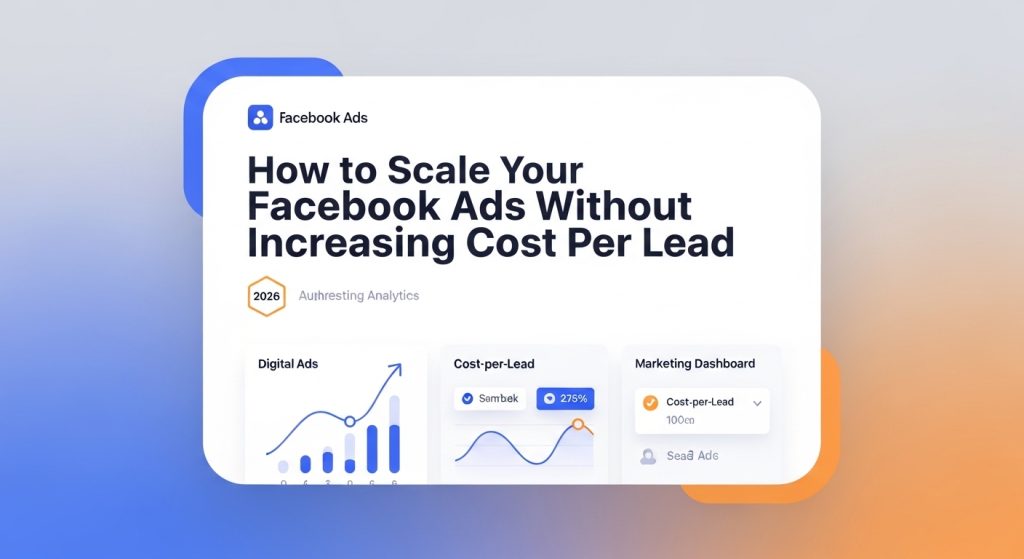
Why Most Scaling Attempts Fail
Many advertisers struggle because they increase budgets too quickly. Competitive analysis shows that sudden spending changes confuse Facebook’s algorithm, causing unstable performance.When businesses attempt to Scale Facebook Ads Campaign overnight, campaigns often exit the learning phase prematurely. Consequently, cost per lead rises and conversion rates decline. Experienced marketers avoid this mistake by scaling gradually.Tools like Google Analytics help identify whether poor results come from targeting, creatives, or landing pages rather than budget size. Competitors who scale successfully first stabilize their campaigns before expansion.Another common issue involves weak audience segmentation. Without strong data signals, scaling only magnifies existing inefficiencies. Instead of pushing spend blindly, advertisers must refine targeting, optimize creatives, and strengthen conversion funnels.Understanding these failures provides the foundation needed to Facebook Ads Campaign safely and profitably.
Understanding the Facebook Learning Phase
Before scaling, advertisers must understand how Facebook optimization works. Every campaign enters a learning phase where the system collects performance data to deliver ads effectively.A smart Scale Ads Campaign strategy respects this process. Making frequent edits resets optimization and disrupts performance stability. Experts using Meta Ads Manager typically wait until campaigns generate consistent conversions before adjusting budgets.
Why Learning Phase Matters
During this stage, Facebook’s AI analyzes audience behavior, engagement patterns, and conversion likelihood. Stable campaigns produce predictable results.
Signs Campaign Is Ready to Scale
Consistent cost per lead, stable click-through rate, and reliable daily conversions signal readiness.
Competitor campaigns prioritize data stability first. Once optimization settles, scaling becomes safer and more efficient, helping advertisers expand without sacrificing performance.
Horizontal vs Vertical Scaling Strategies
Scaling Facebook ads generally follows two proven methods. Understanding both approaches helps businesses Scale Ads Campaign efficiently.
Vertical Scaling
Vertical scaling increases the budget of an existing winning ad set. Experts recommend raising budgets gradually by 10–20% every few days to avoid algorithm disruption.
Horizontal Scaling
Horizontal scaling duplicates successful ad sets while targeting new audiences or placements. This method reduces risk because original campaigns remain untouched.Competitor marketers often combine both strategies. Vertical scaling boosts proven campaigns, while horizontal scaling expands reach safely. Using both simultaneously ensures balanced growth.Businesses that rely on only one method frequently encounter performance drops. A diversified approach allows advertisers to Scale Facebook Ads Campaign while protecting lead quality and maintaining stable acquisition costs.
Audience Expansion Without Cost Increase
Audience expansion plays a critical role when attempting to Scale Ads Campaign efficiently. Instead of targeting entirely new cold audiences, successful advertisers expand strategically.Lookalike audiences built from high-quality data often outperform broad targeting. Businesses using CRM tools like HubSpot or Mailchimp upload customer lists to create highly accurate lookalikes.Moreover, layered targeting improves efficiency. Advertisers combine interests, behaviors, and engagement audiences to maintain relevance while increasing reach.Competitor campaigns frequently retarget website visitors first before expanding outward. This approach ensures scaling starts from warm audiences rather than risky cold traffic.Expanding intelligently allows brands to Scale Facebook Ads Campaign while maintaining conversion quality and preventing rising acquisition costs.
Creative Scaling Framework
Creative fatigue is one of the biggest hidden reasons campaigns stop performing. Even strong audiences lose interest when exposed to repetitive ads. Therefore, creative testing becomes essential to Scale Facebook Ads Campaign successfully.Top competitors continuously introduce new visuals using tools like Canva. Instead of replacing winning ads immediately, marketers rotate creatives gradually to maintain engagement momentum.High-performing formats include short-form videos, testimonials, before-and-after results, and problem-solving educational content. Each variation gives Facebook additional optimization signals.Additionally, small creative tweaks such as new headlines or thumbnails can refresh performance without resetting learning entirely. Businesses that prioritize creative diversity maintain lower costs over time.Creative scaling ensures audience interest remains high while allowing advertisers to Scale Facebook Ads Campaign sustainably.
Budget Scaling Rules Experts Follow
Budget adjustments must follow structured rules. Experienced advertisers never double budgets overnight because sudden changes destabilize campaigns.A proven method to Facebook Ads Campaign involves incremental increases. Most experts raise budgets every 48–72 hours while monitoring performance trends carefully.Competitor agencies also duplicate high-performing ad sets rather than editing originals. This protects winning data while allowing experimentation.Using automated rules inside Meta Ads Manager, advertisers can increase spend only when cost per lead meets predefined targets. Automation reduces emotional decision-making and ensures consistent scaling.When businesses follow disciplined budget practices, growth becomes predictable. Controlled scaling protects profitability while steadily increasing lead volume.
Using Automation and AI for Scaling
Artificial intelligence now plays a major role in advertising performance. Automation tools built by Meta Platforms help advertisers Scale Facebook Ads Campaign efficiently without constant manual intervention.Automated bidding strategies optimize delivery based on conversion probability. Campaign Budget Optimization distributes spend toward the best-performing ad sets automatically.Additionally, automated rules pause underperforming ads and increase budgets for profitable ones. Competitors increasingly rely on automation to maintain consistency at scale.Machine learning improves performance over time when campaigns remain stable. Therefore, advertisers should avoid unnecessary changes once automation begins optimizing effectively.Leveraging AI allows businesses to expand campaigns confidently while maintaining strong efficiency metrics.
Conversion Rate Optimization for Scaling
Scaling does not depend solely on advertising. Landing pages play a massive role in maintaining low costs while expanding campaigns.A successful Scale Facebook Ads Campaign strategy improves conversion rates before increasing traffic. Even small improvements significantly reduce cost per lead.Tools like Hotjar help analyze visitor behavior and identify friction points. Faster page speed, clear messaging, and strong calls-to-action dramatically improve performance.Competitors invest heavily in landing page testing because better conversion rates allow aggressive scaling without higher spending. Instead of chasing cheaper traffic, they improve results from existing visitors.Optimizing conversion experience ensures scaling multiplies success rather than amplifying inefficiencies.
Retargeting for Stable Scaling
Retargeting remains one of the safest ways to Scale Facebook Ads Campaign without increasing acquisition costs. Warm audiences already trust your brand, making conversions easier and cheaper.Businesses retarget website visitors, video viewers, and engagement audiences across Facebook and Instagram. Competitor campaigns often allocate 20–30% of budgets toward retargeting.Sequential messaging improves performance further. First, educate users. Then build trust with testimonials. Finally, present strong offers.This structured nurturing process increases lifetime value while lowering overall marketing costs. Retargeting stabilizes performance, allowing advertisers to expand confidently.A balanced retargeting approach strengthens any Scale Facebook Ads Campaign strategy.
Data Tracking and Performance Metrics
Scaling without data is risky. Successful advertisers rely heavily on analytics before attempting to Scale Facebook Ads Campaign.Key performance indicators include cost per lead, click-through rate, conversion rate, and return on ad spend. Integrating Google Analytics with Facebook reporting provides deeper insights into user journeys.Competitor analysis shows winning brands review data daily but make changes cautiously. Rapid reactions often damage performance instead of improving it.Attribution windows also influence results interpretation. Understanding how long users take to convert helps advertisers make accurate scaling decisions.Consistent measurement transforms scaling from guesswork into predictable growth.
Advanced Scaling Techniques
Once foundational strategies work, advanced methods unlock significant growth opportunities. Experienced marketers Facebook Ads Campaign using layered expansion strategies.Lookalike audiences based on high-value customers allow expansion into new markets while maintaining quality. Cross-platform strategies involving TikTok traffic often feed Facebook retargeting campaigns successfully.Sequential storytelling ads guide prospects through awareness, trust, and conversion stages. Competitors increasingly adopt creative sequencing rather than repetitive promotional ads.Additionally, testing multiple placements and formats reveals hidden performance opportunities. Small optimizations compound over time.Advanced scaling turns steady campaigns into powerful lead-generation engines.
Common Scaling Mistakes to Avoid
Many advertisers fail because they ignore fundamental principles. Attempting to Scale Facebook Ads Campaign without preparation usually increases costs dramatically.One major mistake involves scaling losing campaigns. Only proven winners should receive additional budget. Another frequent issue is creative stagnation, which leads to audience fatigue.Competitors also avoid overlapping audiences, as internal competition drives costs higher. Proper exclusions maintain efficiency.Over-editing campaigns represents another hidden danger. Excessive changes reset optimization and prevent stable growth.Avoiding these mistakes ensures campaigns grow steadily rather than collapsing during expansion efforts.
Future Trends in Facebook Ads Scaling
Digital advertising continues evolving rapidly. Privacy updates and AI advancements reshape how businesses Scale Facebook Ads Campaign moving forward.First-party data collection is becoming increasingly important. Businesses integrating CRM systems and email marketing maintain stronger optimization signals despite tracking limitations.Video-first advertising, conversational ads, and AI-generated creatives are expected to dominate future campaigns. Competitors already leverage automation to reduce manual workload and improve consistency.Furthermore, algorithmic optimization continues improving, allowing advertisers to focus more on strategy and creative messaging.Brands that adapt early will maintain competitive advantages and scale sustainably in the future advertising ecosystem.
Conclusion
Scaling Facebook advertising successfully requires strategy, patience, and data-driven decision-making. Increasing budgets alone rarely produces sustainable growth. Instead, advertisers must combine audience expansion, creative testing, automation, and conversion optimization.Throughout this guide, we explored proven methods used by high-performing marketers and agencies. Each strategy works together to protect cost efficiency while expanding reach. A structured approach ensures campaigns grow predictably rather than chaotically.When businesses focus on stability first and expansion second, they consistently Scale Facebook Ads Campaign without increasing cost per lead. Sustainable scaling transforms advertising from an expense into a reliable growth engine.
FAQs
Increase budgets gradually, test new audiences, refresh creatives, and optimize conversion rates before scaling traffic.
Horizontal scaling by duplicating winning ad sets while keeping originals unchanged is considered safest.
Most experts recommend increasing budgets by 10–20% every 2–3 days.
Rapid budget changes, audience fatigue, or weak creatives often cause performance drops.
Yes. Even small budgets can scale effectively when campaigns are profitable and data-driven.