Maximizing your Google Ads Performance is crucial for achieving measurable business growth. In 2026, advertisers like Procter & Gamble and Capgemini are leveraging data-driven strategies to boost click-through rates (CTR), conversions, and ROI. Beginners and marketers alike must focus on structured approaches, including ad optimization, keyword refinement, audience targeting, and bid management. Whether running Search Ads, Display Network Ads, or YouTube Campaigns, understanding how to analyze performance metrics and implement actionable strategies ensures higher profitability. This guide provides step-by-step insights for optimizing campaigns, reducing wasted spend, and achieving superior results with Google Ads.
Why Performance Optimization Matters
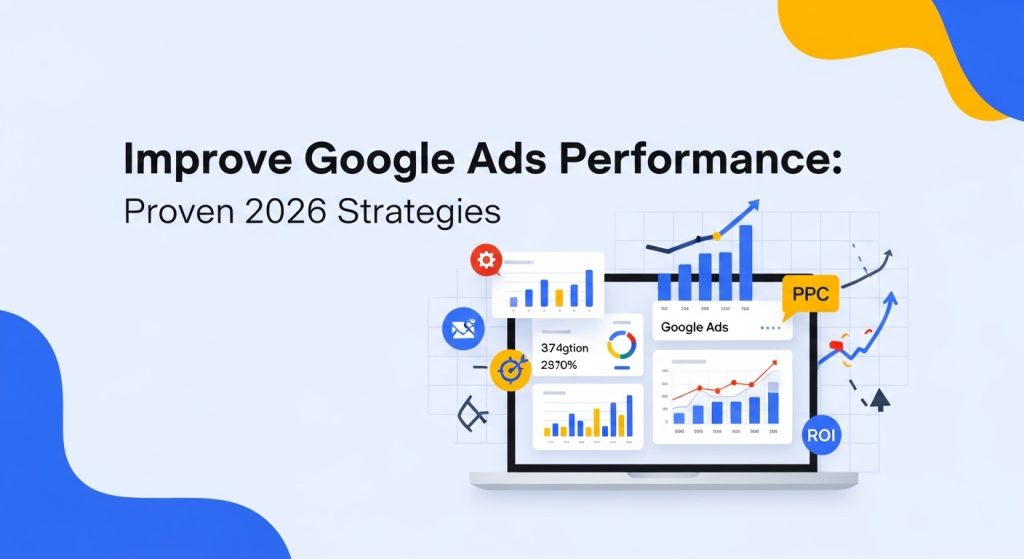
Enhancing Google Ads Performance ensures campaigns generate better ROI while controlling costs. Poorly optimized campaigns waste ad spend and reduce potential conversions. By monitoring key metrics like CTR, CPC, and conversion rate, businesses can pinpoint weak areas. Major brands such as Tata and Danone emphasize performance optimization to stay ahead of competitors. Focusing on audience targeting, keyword selection, and ad copy refinement improves engagement and conversions. For beginners, establishing a systematic approach to campaign evaluation is essential to identify high-performing campaigns and scale them effectively. Performance optimization also enhances account quality scores, reducing costs over time.
Set Clear Campaign Objectives
A strong Google Ads Performance strategy starts with defining campaign objectives. Are you aiming for lead generation, sales, or brand awareness? Each goal requires a unique approach to targeting, budgeting, and bidding. Aligning campaign structure with objectives ensures ads reach the right audience and maximize ROI. Businesses like L’Oreal utilize goal-specific strategies, optimizing spend based on high-converting campaigns. Beginners should identify KPIs for each campaign, such as conversion rate, cost-per-acquisition (CPA), or return-on-ad-spend (ROAS). Clear objectives provide focus for ad copy, keyword selection, and performance monitoring, forming the foundation of any Google Ads Performance improvement plan.
Audience Targeting Optimization
Targeting the right audience is crucial to Improve Google Ads Performance. Segment users based on demographics, interests, and behavior. Utilize Google Ads Audience Manager to create custom and remarketing audiences. Remarketing campaigns, in particular, reach previous visitors who are more likely to convert. Companies like Capgemini use audience insights to reduce wasted spend and increase CTR. Beginners should test multiple audience combinations to determine which segments yield the highest ROI. Effective targeting ensures ads appear to the most relevant users, enhancing performance metrics and maximizing campaign effectiveness while keeping budget utilization efficient.
Keyword Research and Selection
Optimized keywords are the backbone of Google Ads Performance. Focus on high-intent, long-tail keywords for better conversions, and incorporate negative keywords to prevent irrelevant clicks. Tools like Google Keyword Planner and SEMRush help identify opportunities and benchmark competitors. Major brands such as Procter & Gamble analyze keyword performance constantly, prioritizing profitable search terms. Beginners should categorize keywords by match types—broad, phrase, and exact—to control targeting precision. Well-structured keyword strategies not only enhance CTR and conversions but also improve quality scores, reducing CPC and boosting overall campaign efficiency.
Crafting Compelling Ad Copy
Creating persuasive ad copy is essential to Improve Google Ads Performance. Headlines should be clear, relevant, and include primary keywords. Description lines must highlight benefits and include a strong call-to-action (CTA). Testing variations through A/B campaigns allows advertisers to identify high-performing messages. Companies like Danone emphasize ad relevance to target audience intent, improving CTR and conversion rates. Beginners should integrate dynamic keyword insertion, unique value propositions, and trust signals in ads. Optimized ad copy aligns with user search intent, increases engagement, and directly impacts performance metrics in Google Ads campaigns.
Optimizing Landing Pages
Landing page experience heavily influences Google Ads Performance. Ensure pages load quickly, are mobile-friendly, and have a clear CTA aligned with the ad. High-quality content and minimal distractions improve user engagement and conversion rate. Brands like Tata and L’Oreal focus on optimized landing pages to enhance campaign ROI. Beginners should track landing page metrics such as bounce rate, session duration, and conversion rate. Integrating landing page improvements with ad campaigns ensures cohesive user journeys, leading to higher quality scores and reduced CPC while maximizing Google Ads effectiveness.
Bid Management Strategies
Effective bid management is key to Improving Google Ads Performance. Automated bidding strategies, like Target CPA, Target ROAS, or Maximize Conversions, adjust bids in real-time for optimal results. Manual bidding can be effective for precise control over competitive keywords. Leading companies like Capgemini leverage automation to maintain efficiency at scale. Beginners should monitor performance closely, adjusting bids based on conversion data and keyword competitiveness. Proper bid management ensures higher ad positions for top-performing keywords, reduces wasted spend, and directly improves ROI across campaigns.
Using Ad Extensions
Ad extensions enhance visibility and clickability, improving Google Ads Performance. Extensions such as sitelinks, callouts, structured snippets, and call extensions provide additional information and incentives for users. Companies like Procter & Gamble use extensions to increase CTR and convey product benefits. Beginners should strategically implement extensions to highlight promotions, services, or unique selling points. Regular monitoring ensures that extensions contribute to conversions without cluttering the ad. Proper use of ad extensions not only improves engagement but also enhances ad relevance and quality score, directly impacting campaign ROI.
Monitoring Metrics
Monitoring KPIs is vital to Improve Google Ads Performance. Track CTR, CPC, conversion rate, cost-per-acquisition, and ROAS. Platforms like Google Analytics and the Google Ads Dashboard provide actionable insights. Brands such as Danone consistently analyze these metrics to refine campaigns and allocate budgets efficiently. Beginners should schedule weekly reviews and create performance reports to spot trends. Continuous monitoring allows for quick adjustments, ensuring high-performing campaigns maintain ROI. Metrics-driven optimization is the backbone of a successful Google Ads Performance strategy.
Implementing Remarketing
Remarketing campaigns target users who have previously engaged with your brand. Allocating budget to remarketing improves Google Ads Performance by converting warm leads. Tools like Google Ads Audience Manager allow precise segmentation for Display, Search, and YouTube campaigns. Companies like Capgemini leverage remarketing to increase CTR and conversions. Beginners should start with a small segment, testing ads for engagement and ROI. Remarketing ensures efficient use of ad spend and higher conversion potential, making it a critical component of any performance optimization strategy.
Seasonal Campaign Optimization
Adjusting campaigns seasonally enhances Google Ads Performance. E-commerce brands, for example, increase budgets during holidays, while service-based businesses focus on peak demand periods. Tools like Google Trends and historical data guide seasonal adjustments. Companies like L’Oreal plan campaigns in advance to align with consumer behavior, ensuring ads are timely and relevant. Beginners should implement flexible budgets and test seasonal campaigns to capitalize on market trends. Seasonal optimization maximizes ROI, reduces wasted spend, and enhances campaign relevance throughout the year.
Testing and Experimentation
Continuous testing is essential to Improve Google Ads Performance. A/B testing ad copy, headlines, visuals, and targeting helps identify high-performing elements. Platforms like Google Ads Editor enable efficient bulk testing. Companies like Procter & Gamble routinely experiment to refine campaigns and increase conversions. Beginners should allocate a portion of their budget for controlled experiments. Testing ensures optimization decisions are data-driven, improves engagement, and directly impacts ROI. By integrating experimentation into routine workflow, businesses maintain a competitive edge in 2026.
Scaling Winning Campaigns
Scaling successful campaigns amplifies Google Ads Performance. Increase budgets on high-performing ads, expand targeting, and explore new platforms like YouTube Ads and Display Network. Tools like SEMRush and Google Keyword Planner assist in identifying growth opportunities. Companies such as Capgemini and Danone gradually scale campaigns to maintain ROI while reaching new audiences. Beginners should monitor metrics closely during scaling to avoid overspending. Proper scaling ensures maximum exposure and consistent performance improvement across campaigns.
Conclusion
A systematic approach to Improve Google Ads Performance in 2026 involves clear objectives, precise targeting, optimized keywords, compelling ad copy, landing page improvements, and performance monitoring. Integrating remarketing, seasonal adjustments, ad extensions, and automated bidding enhances ROI. Continuous testing and gradual scaling ensure campaigns remain profitable and efficient. By implementing these proven strategies, beginners and seasoned marketers alike can maximize conversions, reduce wasted spend, and achieve measurable success with Google Ads Marketing.
FAQs
Focus on high-intent keywords, optimized ad copy, audience targeting, and performance monitoring.
CTR, CPC, CPA, ROAS, and conversion rate are critical indicators of performance.
Yes, strategies like Target CPA or Maximize Conversions help improve efficiency and ROI.
Landing page experience significantly impacts conversions, quality score, and CPC.
Absolutely, remarketing targets warm leads and boosts CTR and conversions.