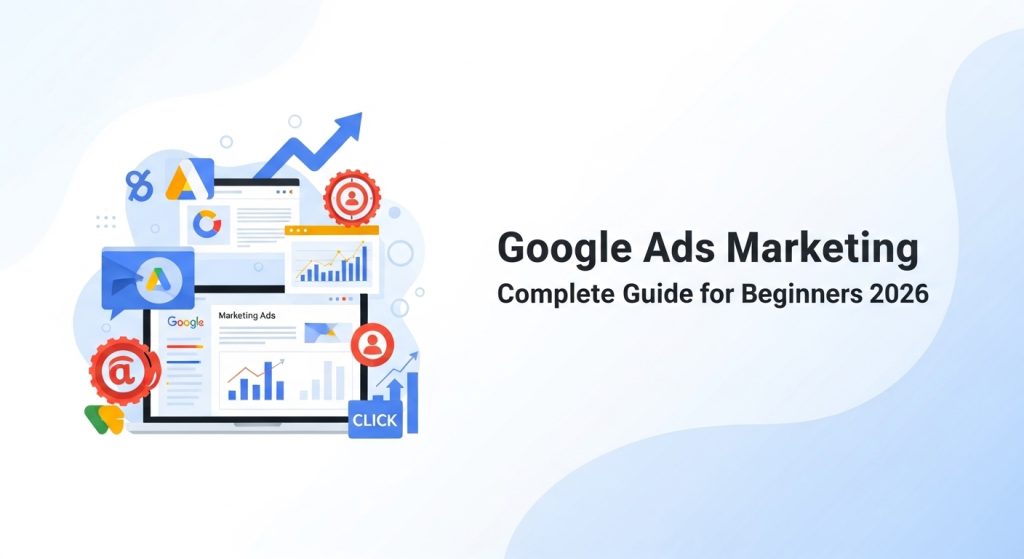
Google Ads Marketing is a powerful tool that allows businesses to reach their target audience through paid search campaigns. Unlike organic SEO, Google Ads delivers immediate visibility on Google Search, YouTube, and Google Display Network, making it ideal for beginners looking to drive traffic and generate leads. By understanding the principles of pay-per-click (PPC) advertising, businesses can optimize their campaigns for maximum ROI. Google Ads also provides detailed insights on audience behavior, search intent, and conversion metrics. Beginners often start by learning ad creation, keyword targeting, and campaign structuring. Leveraging these techniques enables companies, from startups to large corporations like Procter & Gamble and Tata, to reach potential customers efficiently. This guide covers the essential steps, best practices, and strategies for successful Google Ads Marketing in 2026.
Why Google Ads Marketing is Important
Investing in Google Ads Marketing helps businesses achieve measurable results quickly. Unlike traditional advertising, digital campaigns provide data on impressions, clicks, and conversions. This transparency allows advertisers to monitor ROI and optimize campaigns in real time. High-intent keywords ensure that ads reach users who are ready to engage or purchase. Platforms like Google Ads and Bing Ads provide advanced targeting options, including demographics, location, and device types. Companies such as Danone and Capgemini rely on PPC campaigns to supplement their organic marketing efforts. Additionally, Google Ads supports remarketing, helping businesses reconnect with users who previously engaged with their site. For beginners, mastering these features ensures efficient spending and higher conversion rates while laying the foundation for long-term marketing success.
Setting Goals for Your Campaigns
Before launching Google Ads Marketing campaigns, define clear goals. Are you aiming to drive sales, collect leads, or build brand awareness? Each goal requires a tailored approach. Mapping audience intent is crucial: users searching “best pool heaters” are ready to buy, while queries like “how swim pool heaters work” indicate research-phase interest. Categorize keywords and ads into awareness, consideration, and decision stages to align with the customer journey. Using tools like Google Analytics and Google Ads Audience Insights helps identify audience behavior patterns. Establishing clear objectives ensures campaigns remain focused, increases efficiency, and improves Quality Score. Beginners who set precise goals can allocate budgets effectively and optimize campaigns for measurable results.
Understanding the Types of Google Ads
Google Ads Marketing offers multiple ad formats, including Search Ads, Display Ads, Video Ads, and Shopping Ads. Search Ads appear when users actively look for products or services, making them ideal for high-intent targeting. Display Ads use visual banners to increase brand awareness across websites in the Google Display Network. Video Ads, primarily on YouTube, engage users with storytelling or product demos. Shopping Ads showcase products directly in search results, driving e-commerce conversions. Each type serves unique objectives; beginners should start with Search Ads for measurable results. Selecting the right ad format ensures alignment with campaign goals, enhances engagement, and maximizes ROI while providing flexibility to scale campaigns over time.
Keyword Research for Google Ads
Effective Google Ads Marketing relies heavily on proper keyword research. Identifying high-intent keywords ensures your ads reach users ready to take action. Tools like Google Keyword Planner, SEMRush, and Ahrefs provide search volume, competition, and CPC insights. Organize keywords into clusters based on product categories, intent stage, or theme. Long-tail keywords, such as “best energy-efficient swim pool heaters,” often deliver better ROI than generic terms. Incorporate negative keywords to avoid irrelevant clicks and wasted budgets. Seed keywords can be expanded by analyzing competitors like Procter & Gamble and Danone, identifying gaps in targeting. Well-researched keywords are the backbone of any successful Google Ads Marketing strategy.
Structuring Campaigns and Ad Groups
Organizing campaigns and ad groups properly enhances Google Ads Marketing efficiency. Group keywords by theme, product, or service for relevance. Each ad group should have 5–20 related keywords to maintain focus. Align ad copy with keyword clusters to improve Quality Score, CTR, and conversion rates. Tools like Google Ads Editor allow bulk editing for large campaigns. A logical structure simplifies performance tracking and budget allocation. For example, a campaign promoting pool heaters might include ad groups for “energy-efficient heaters,” “automatic temperature control,” and “safety features.” Proper structure ensures high relevancy, reduces wasted spend, and helps beginners manage campaigns effectively while scaling over time.
Crafting Engaging Ad Copy
High-performing ad copy is crucial in Google Ads Marketing. Include the main keyword naturally in headlines and descriptions. Highlight USPs like “energy-saving technology” or “free installation.” Strong CTAs such as “Buy Now” or “Get a Quote Today” increase engagement. Dynamic Keyword Insertion (DKI) personalizes ads for search queries, boosting CTR. A/B testing multiple variations allows marketers to identify top-performing messages. Align ad copy with landing pages for consistency and relevance. Tools like Unbounce and Google Optimize assist in optimizing landing experiences. Engaging ad copy enhances Quality Score, reduces CPC, and converts clicks into customers, making it a critical aspect for beginners in Google Ads campaigns.
Setting Budgets and Bidding Strategies
In Google Ads Marketing, budget allocation and bidding strategies influence campaign success. Choose between manual bidding, automated bidding, or strategies like Target CPA, Maximize Conversions, or Target ROAS. Manual bidding gives granular control, while automated strategies save time and optimize performance using AI insights. Set daily budgets based on campaign goals and expected traffic volume. For beginners, start small, analyze performance, and scale gradually. Platforms like Google Ads provide bid simulators to predict performance outcomes. Proper budgeting and bidding minimize wasted spend, improve ad placement, and ensure campaigns generate profitable returns, making this step essential for sustainable PPC marketing success.
Leveraging Ad Extensions
Google Ads Marketing benefits significantly from ad extensions. Extensions increase visibility, provide additional information, and improve CTR. Popular options include sitelink, callout, structured snippets, and call extensions. For example, a pool heater company can use sitelinks for product categories like “solar heaters,” “automatic controls,” and “installation services.” Call extensions enable users to contact support directly from search results. Ad extensions enhance ad relevance, improve Quality Score, and drive higher engagement without increasing cost-per-click. Beginners should implement extensions strategically to provide value, highlight USPs, and optimize overall campaign performance.
Conversion Tracking and Analytics
Tracking conversions is essential for measuring Google Ads Marketing success. Integrate Google Analytics and Google Ads Conversion Tracking to monitor actions like purchases, form submissions, or newsletter sign-ups. Define clear conversion goals for each campaign and ad group. Analyze which keywords, ads, and landing pages deliver the highest ROI. Use this data to optimize underperforming campaigns or scale successful ones. Event tracking and multi-channel attribution reveal deeper insights into audience behavior. Accurate tracking informs better budget allocation, targeting decisions, and long-term strategy adjustments, ensuring campaigns are efficient, data-driven, and profitable.
Optimizing Campaign Performance
Continuous optimization is key in Google Ads Marketing. Monitor CTR, CPC, CPA, and conversion rates regularly. Pause low-performing keywords and expand high-converting long-tail phrases. Use search term reports to discover new opportunities and eliminate irrelevant traffic with negative keywords. A/B testing ad variations helps identify the most effective copy, headlines, and CTAs. Adjust bids based on device, location, or time of day to maximize ROI. Optimization ensures campaigns remain competitive, reduce wasted spend, and maintain high Quality Scores, giving businesses an edge in crowded digital marketplaces.
Advanced Targeting Options
Advanced targeting boosts the effectiveness of Google Ads Marketing. Platforms like Google Ads offer demographic, geographic, interest-based, and remarketing options. For instance, retargeting previous website visitors encourages conversions from engaged users. Lookalike audiences help discover similar prospects with high intent. Device targeting ensures mobile users receive tailored ads, while time-of-day adjustments optimize performance for peak hours. Implementing these strategies allows advertisers to refine reach, improve CTR, and increase conversions. Beginners leveraging advanced targeting create highly efficient campaigns that reach the right audience at the right time, reducing waste and maximizing ROI.
Managing Negative Keywords
Negative keywords prevent ads from showing to irrelevant search queries in Google Ads Marketing. For example, if promoting premium swim pool heaters, exclude terms like “cheap” or “DIY.” Regularly review search term reports to identify additional negative keywords. This strategy minimizes wasted spend, improves CTR, and enhances overall Quality Score. Tools like Google Ads Search Term Report simplify management. Strategically implementing negative keywords ensures campaigns remain targeted, cost-effective, and aligned with business objectives, helping beginners maximize profitability.
Scaling and Expanding Campaigns
Once initial campaigns succeed, scaling is critical in Google Ads Marketing. Expand to new keywords, audience segments, and geographic locations. Test additional ad formats like Display, Video, or Shopping Ads to diversify reach. Use automated bidding strategies to handle larger budgets efficiently. Track performance closely to avoid wasted spend while scaling. Advanced tools like SEMRush and Ahrefs help identify competitor gaps and opportunities. Scaling thoughtfully ensures sustainable growth, higher conversions, and maximized ROI while maintaining the quality of campaigns for long-term success.
Measuring Overall Success
Measuring success ensures Google Ads Marketing campaigns are effective. Key metrics include CTR, conversion rate, CPA, and ROI. Platforms like Google Ads and Google Analytics provide detailed insights into campaign performance. Regular reporting allows for strategic adjustments, budget reallocations, and optimization of underperforming campaigns. Measuring and analyzing results helps businesses make informed decisions, improve targeting, and maintain profitable campaigns over time. Tracking performance consistently ensures campaigns remain competitive and deliver measurable value.
Conclusion
Mastering Google Ads Marketing allows businesses to generate targeted traffic, improve conversions, and maximize ROI. Beginners can achieve professional results by setting clear goals, conducting proper keyword research, structuring campaigns, crafting engaging ads, and optimizing performance. Leveraging advanced targeting, ad extensions, and conversion tracking further enhances effectiveness. Continuous refinement ensures campaigns remain cost-effective and competitive. Following this step-by-step guide equips marketers to launch, manage, and scale successful Google Ads Marketing campaigns in 2026, driving growth and measurable business results.
FAQs
It’s the process of using paid ads on Google Search, YouTube, and Display Network to reach audiences and drive conversions.
It provides immediate visibility, measurable results, and insights to optimize campaigns for ROI.
Google Ads, Google Analytics, SEMRush, Ahrefs, and Ubersuggest are essential tools.
Regular monitoring of CTR, CPA, and conversions is essential to maintain performance.
Keywords that prevent ads from appearing on irrelevant searches, improving efficiency and ROI.